Reduce Unnecessary Dermatology Referrals.
Free Up Specialist Capacity for Patients Who Need It Most.
MoleScan supports NHS primary care in triaging skin lesions through structured, clinician-led assessment with UK GPwSI dermatology doctor review — helping reduce avoidable 2-week-wait referrals while maintaining patient safety.
of suspected skin cancer referrals are ultimately benign — placing significant pressure on dermatology services.
Rapid clinical reports within 24 hours to support timely, confident decision-making in primary care.
of cases reviewed by UK GPwSI doctors with specialist expertise in dermatology.
of suspected skin cancer referrals are ultimately benign — placing significant pressure on dermatology services.
Rapid clinical reports within 24 hours to support timely, confident decision-making in primary care.
of cases reviewed by UK GPwSI doctors with specialist expertise in dermatology.
Clinician-Led Assessment
Every case is reviewed by a UK GPwSI (General Practitioner with a specialist interest in dermatology).
24-Hour Reports
Clear, structured reports delivered within one working day to support safe triage decisions.
Supports Reduction in 2WW Pressure
Helps reduce avoidable 2-week-wait referrals and optimise specialist dermatology capacity.
NHS-Aligned Platform
Aligned with DCB0129 clinical safety standards, GDPR, and DTAC requirements for safe NHS integration.
The Dermatology Referral Challenge
NHS dermatology services are under sustained pressure from rising 2-week-wait referral volumes. A significant proportion of these referrals are for benign lesions that could be safely managed in primary care with appropriate specialist support — contributing to long waits for patients who need routine and urgent dermatology care.
of 2WW skin cancer referrals are for benign lesions
average wait for non-urgent dermatology appointments
year-on-year increase in 2WW dermatology referrals
Timely specialist assessment.
Better outcomes for patients.
Supporting primary care with fast, specialist dermatology assessment.
Right advice. Right time. Right outcome.
MoleScan gives GP surgeries access to specialist dermatology skin lesion assessment within 24 hours — helping you reduce unnecessary referrals, prioritise the right patients, and act with confidence.

Patient concern about a mole or a skin lesion
A patient notices a new or changing mole and wants to get it assessed by their GP.

Patient contacts GP surgery
The patient contacts their GP surgery to request an appointment for assessment of a skin lesion.

Nurse / HCA assessment
The patient attends a brief, focused appointment for clinical history and lesion assessment.
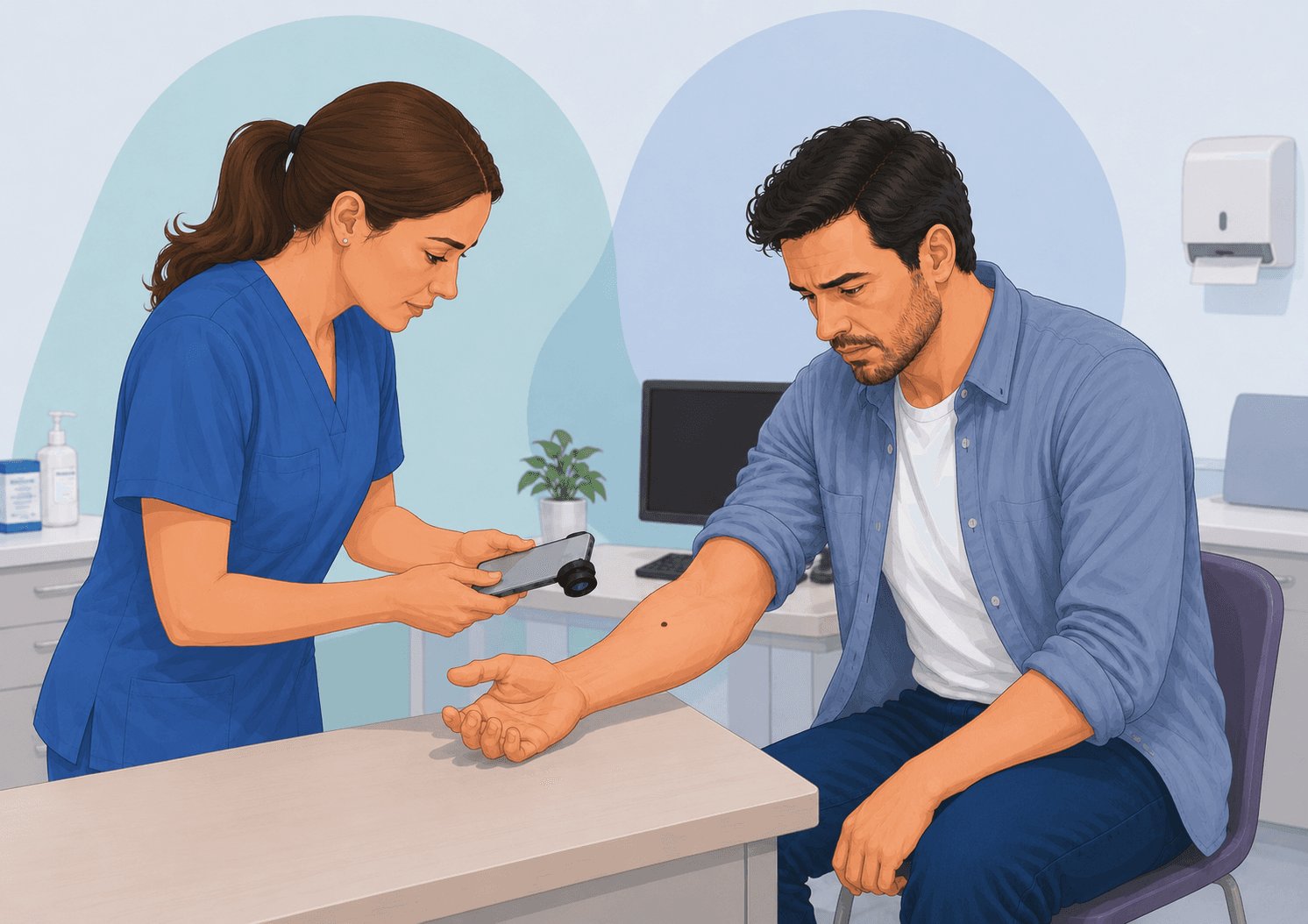
Clinical data and dermoscopic images captured
- Structured clinical questionnaire completed
- Dermoscopic images captured
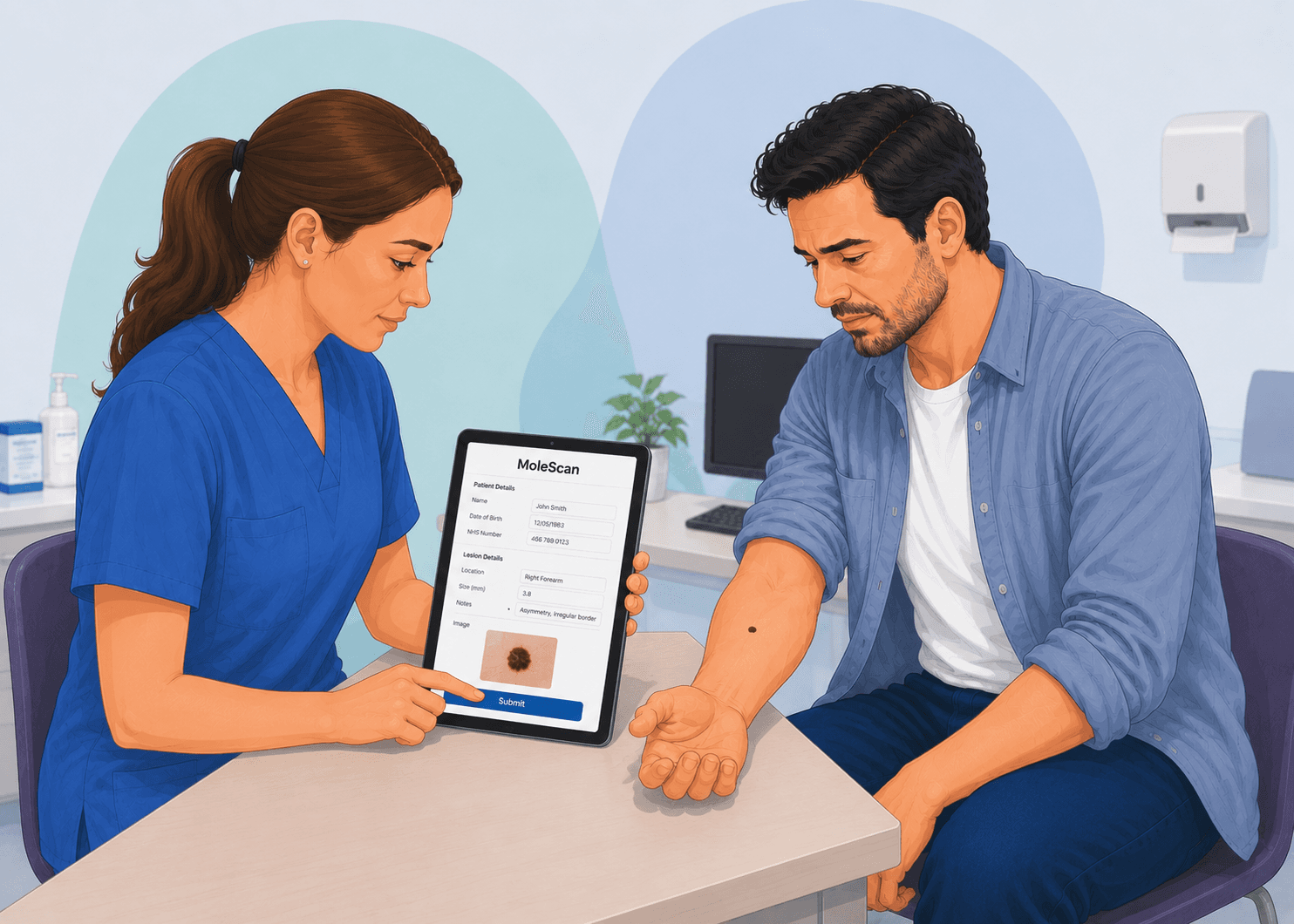
Case submitted for MoleScan clinician review
The case is securely submitted for review by a UK dermatologist within a structured and clinically governed assessment pathway, with all clinical details and images clearly organised.
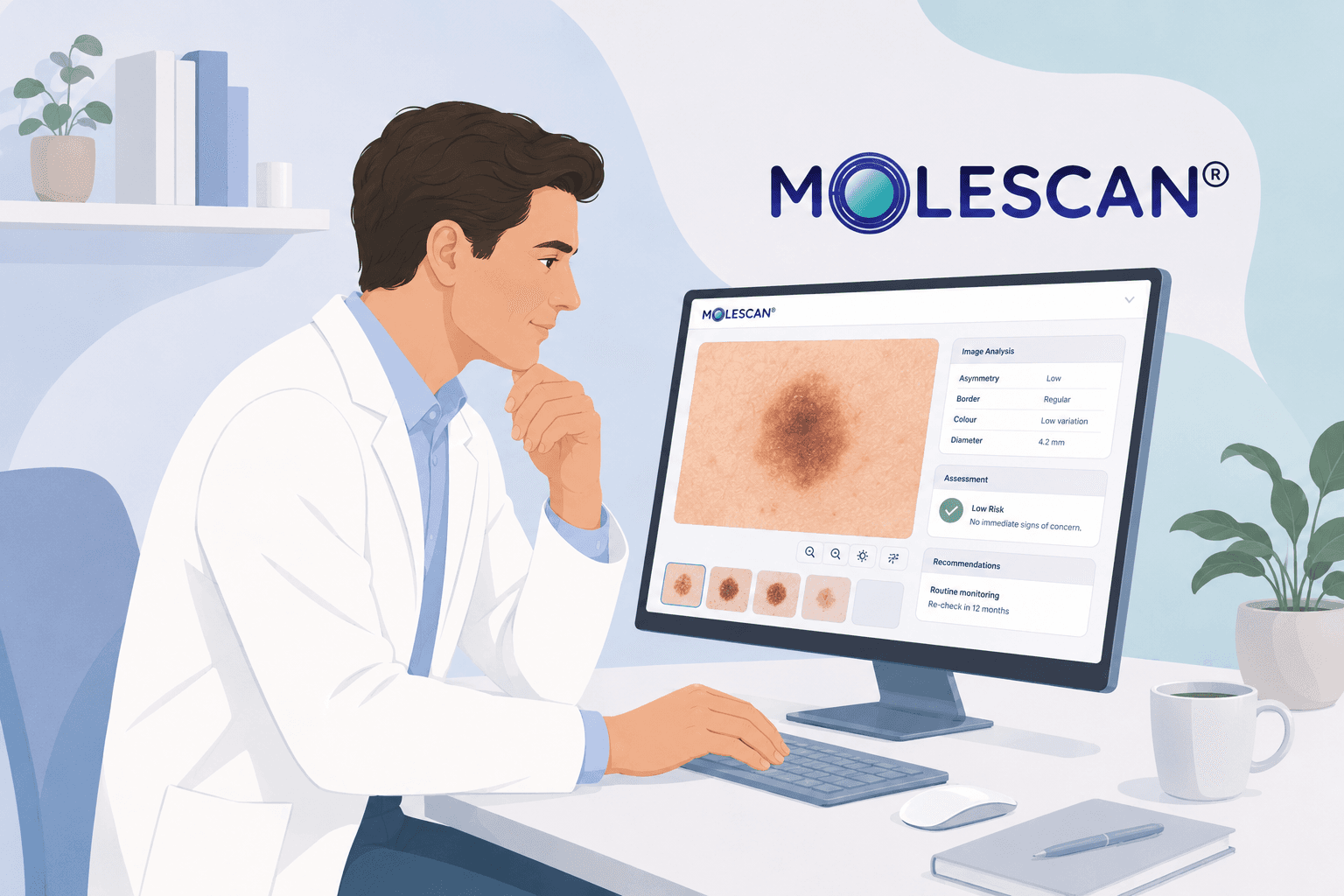
Case reviewed by a UK dermatologist
Every case is reviewed and reported within 24 hours of receipt, by a GMC registered GPwSI or Consultant Dermatologist, ensuring expert clinical judgement and clear next-step guidance.
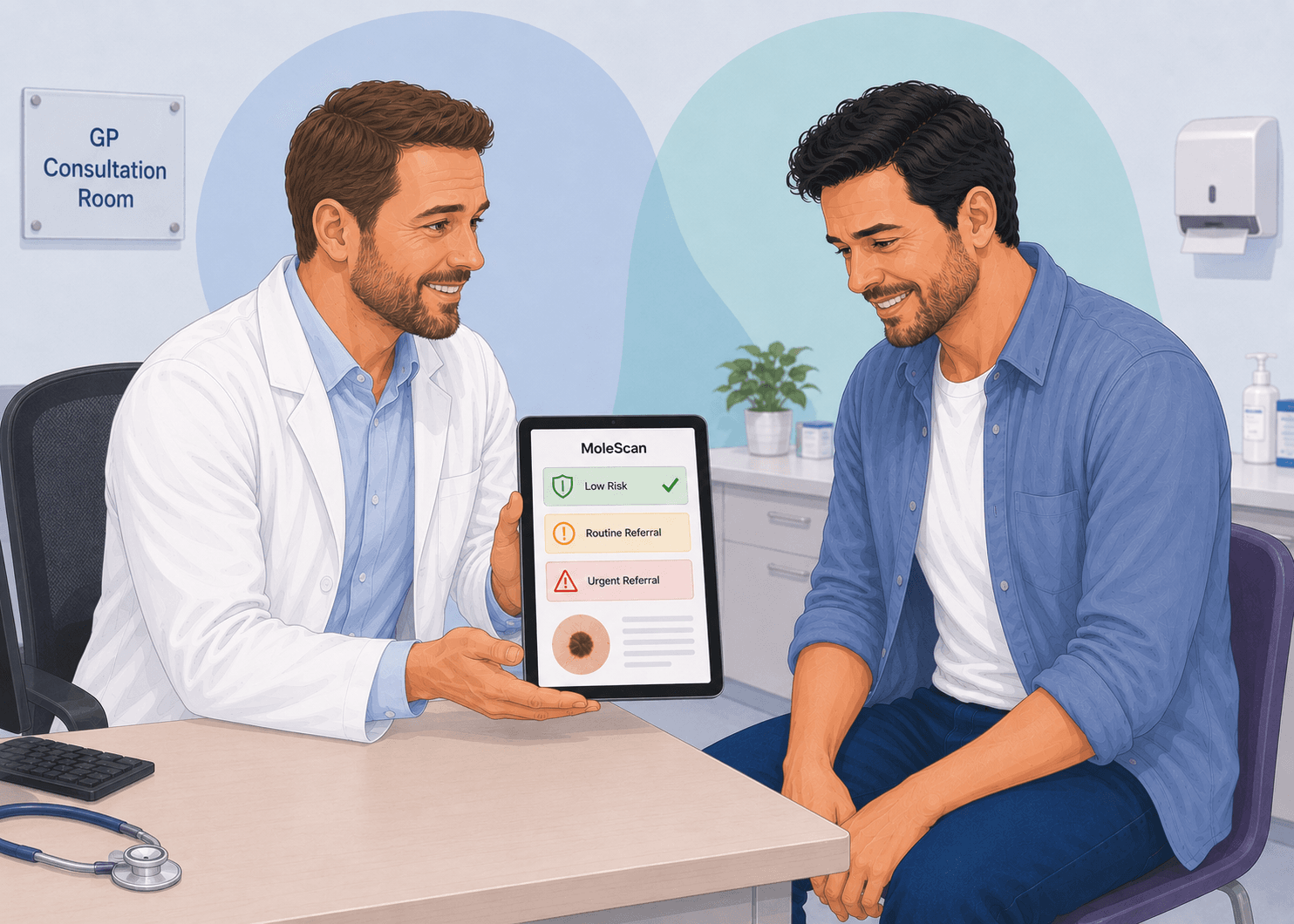
Clear outcome guidance (RAG-rated)
Each report is assigned a clear RAG-rated outcome, guiding whether it is safe to monitor, or refer.
GREEN – Low risk
Reassure / Monitor
AMBER – Moderate risk
Review in primary care / Routine Dermatology referral
RED – High risk
Urgent 2WW dermatology referral recommended
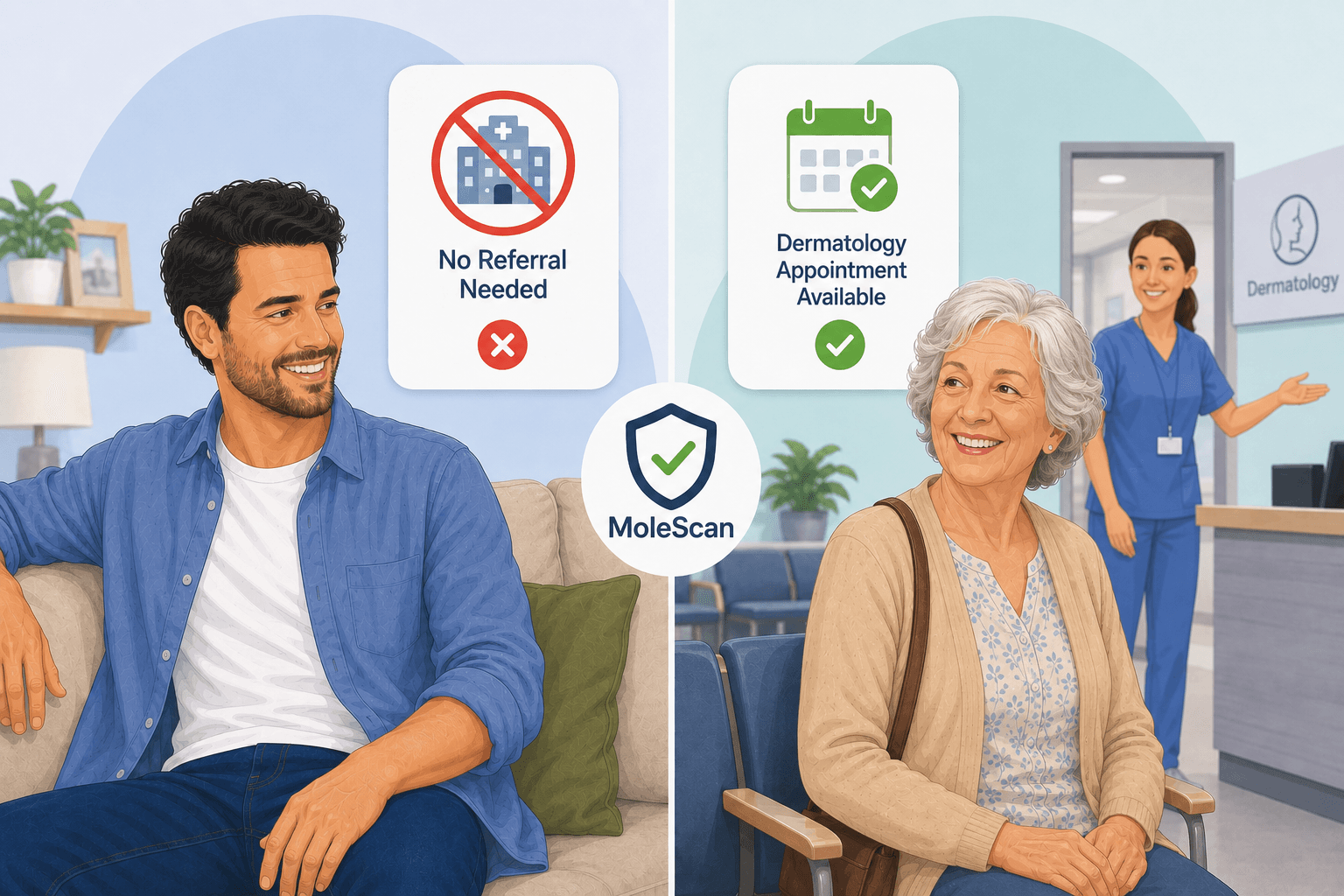
Making Dermatology Referral Pathways More Efficient and Timely to the Patients Who Need Them Most.
Reducing unnecessary 2 week wait referrals can help free NHS dermatology capacity for patients who truly need timely care — MoleScan helps support that process.
Expert assessment. Clear guidance. Confident decisions.
Benefits for NHS Commissioners
MoleScan supports NHS service optimisation by enabling structured, clinically governed skin lesion triage at the primary care level.
Reduce Unnecessary 2WW Referrals
MoleScan enables primary care clinicians to triage skin lesions before referral, reducing avoidable 2-week-wait submissions and improving pathway efficiency.
Cost-Effective Pathway Management
By identifying benign lesions at the primary care level, MoleScan reduces unnecessary secondary care appointments and associated diagnostic costs.
Clinically Governed & Safe
Every case is reviewed by a UK GPwSI in Dermatology or Consultant Dermatologist. High-risk cases are clearly identified and directed to urgent referral pathways.
Scalable Across Primary Care Networks
Deploy MoleScan across multiple GP practices and primary care networks (PCNs) within your ICB. Centralised reporting, audit, and clinical governance across all locations.
Reduce Routine Dermatology Waiting Times
By reducing unnecessary 2WW referrals, MoleScan helps release capacity in secondary care — allowing routine and urgent dermatology patients to be seen sooner.
Compliance & Clinical Governance
MoleScan is designed to meet the governance, safety, and data standards expected of NHS-aligned digital clinical services.
Clinical Safety
Aligned with DCB0129 and DCB0160 clinical safety standards, with defined clinical risk management and oversight processes.
Data Governance
GDPR compliant with UK data residency. All data encrypted in transit and at rest, with role-based access control and audit logging.
DTAC Alignment
Structured to meet NHS Digital Technology Assessment Criteria (DTAC) requirements, supporting future commissioning readiness.
Accessibility
Built to WCAG 2.2 AA standards, supporting accessible use across NHS and primary care environments.
Frequently Asked Questions
MoleScan supports primary care decision-making within existing referral pathways. GPs and primary care practitioners use MoleScan to triage lesions before making a 2-week-wait referral. Benign cases can be managed in primary care, while suspicious cases are appropriately directed to urgent referral pathways with clear clinical guidance — helping reduce unnecessary 2WW referrals and free up specialist capacity.
MoleScan is a doctor-led clinical triage and workflow platform, not a standalone diagnostic medical device. It supports practitioner decision-making through structured assessment and UK GPwSI dermatologist review. Final clinical responsibility and decision-making remain with the treating clinician.
MoleScan is fully GDPR compliant, with all patient data stored securely within the UK. The platform is aligned with NHS Digital Technology Assessment Criteria (DTAC), the Data Security and Protection Toolkit, and DCB0129/DCB0160 clinical safety standards, with encryption, audit logging, and role-based access controls in place.
Yes. MoleScan is designed for scalable, multi-site deployment. ICBs can commission MoleScan across multiple GP practices and primary care settings, with centralised reporting, consistent clinical governance, and standardised triage processes.
MoleScan's approach combines two established clinical methods: structured dermoscopic assessment for risk stratification, and specialist tele-dermatology review by UK clinicians. Both approaches are supported by strong evidence in the published literature. Contact us for a detailed clinical evidence summary.
Explore MoleScan for Your Organisation
Speak to our team about how MoleScan can support your dermatology pathway — reducing unnecessary referrals and improving access to specialist care.