Introduction
The NHS 2-week-wait (2WW) pathway was designed to ensure that patients with suspected cancer are assessed urgently by specialist services. In dermatology, this pathway — widely referred to as the 2 week wait dermatology referral pathway — plays a critical role in identifying melanoma and other skin cancers early, when treatment outcomes are significantly better. But over the last decade, the system has come under increasing pressure, not because clinicians are doing the wrong thing, but because skin cancer referrals have risen dramatically while the number of confirmed cancers has not increased at the same pace.
A decade of rising referrals
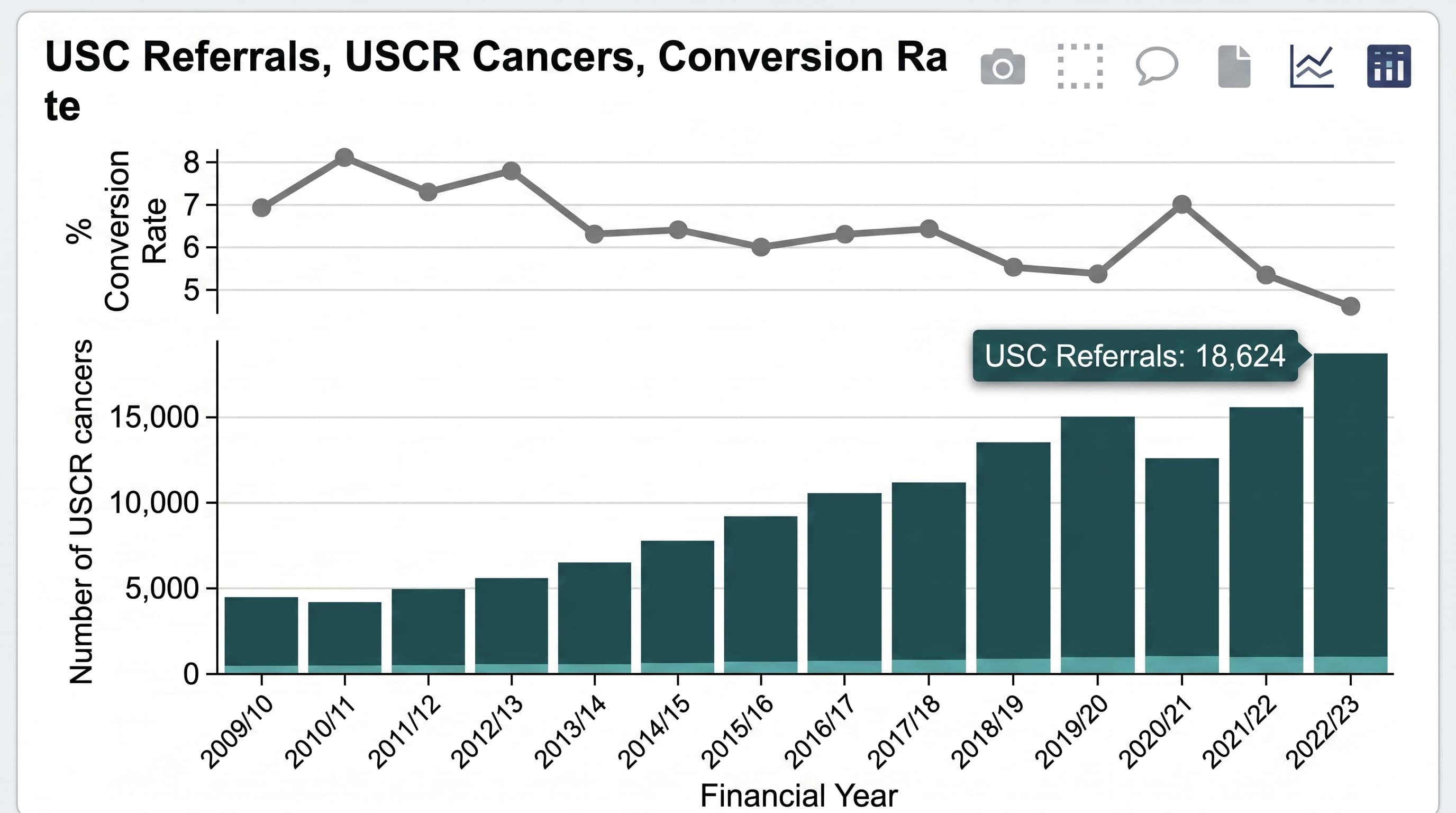
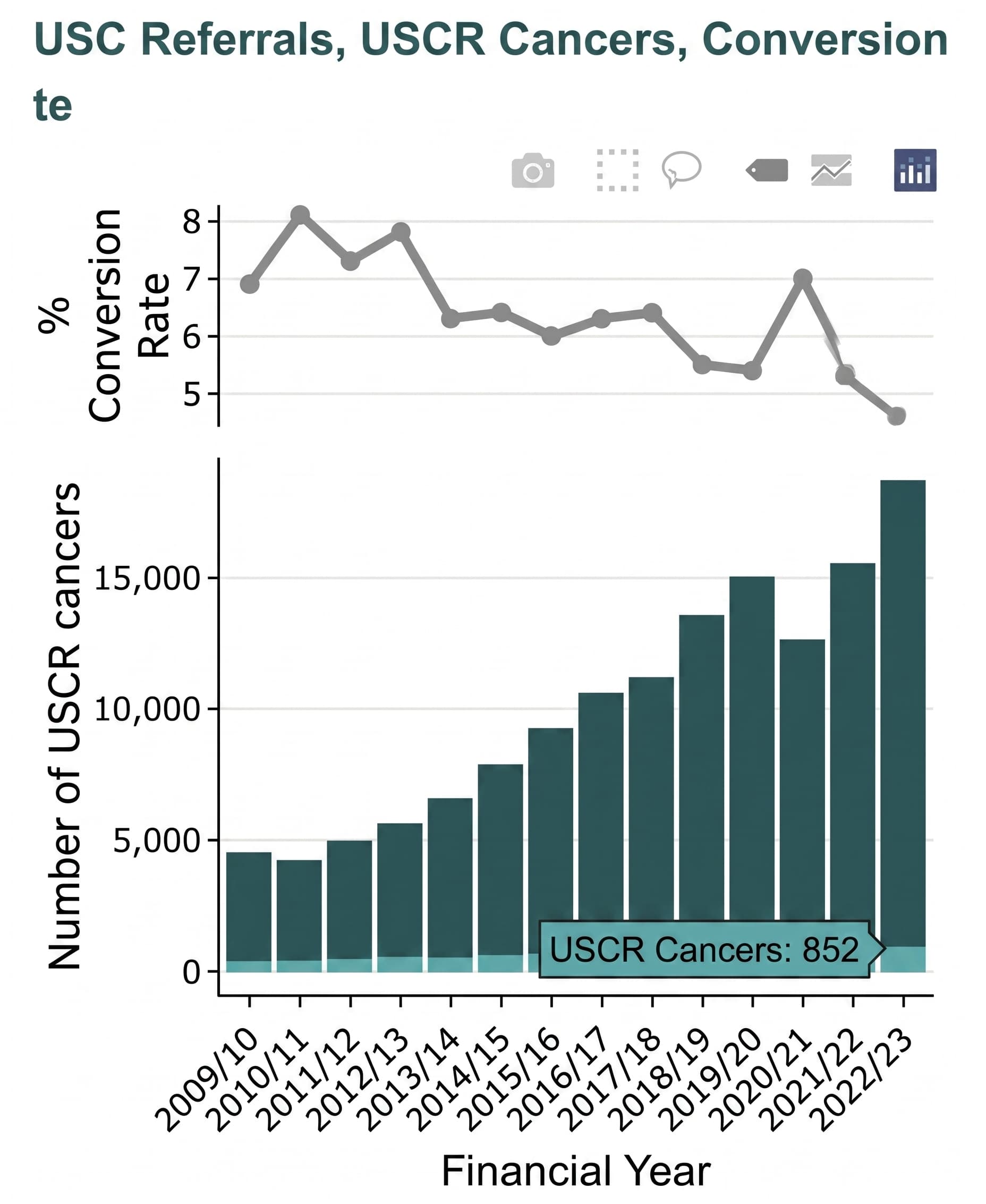
According to NHS England data, urgent suspected skin cancer referrals in England have increased substantially over recent years. The crude urgent suspected skin cancer referral rate rose from 371 per 100,000 population in 2009/10 to 1,345 per 100,000 population in 2022/23. That represents a major increase in demand placed on dermatology services across England.
At the same time, the 2WW skin cancer conversion rate in the UK — the percentage of urgent referrals that ultimately result in a cancer diagnosis — has gradually fallen. NHS England data shows conversion rates decreasing from approximately 8.3% in 2009/10 to 6.2% in 2022/23. In simple terms: more patients are being referred urgently, but proportionally fewer referrals are resulting in a confirmed cancer diagnosis.
Source: NHS England Cancer Referral Conversion and Detection Dashboard / NDRS Cancer Waiting Times Data.
What this means in practice
This does not mean referrals are inappropriate. In fact, most clinicians are doing exactly what they should be doing — referring cautiously when uncertainty exists. Early melanoma can be subtle, and many malignant lesions can look benign to the naked eye, particularly in early stages.
The problem is not over-caution. The problem is that referral decisions are often made without structured lesion assessment support beforehand.
The pressure on dermatology services
As referral numbers rise, dermatology services inevitably become stretched. Clinic capacity becomes limited, waiting lists increase, and specialist time must be distributed across an increasingly large volume of lesions that are ultimately benign.
NHS England’s pathway optimisation guidance acknowledges the importance of improving triage and pathway efficiency in order to reduce avoidable pressure on specialist services. The challenge is maintaining safety while improving selectivity, because no clinician wants to miss a melanoma.
Source: NHS England Cancer Referral Conversion and Detection Dashboard / NDRS Cancer Waiting Times Data.
Regional variation highlights the scale of the issue
Regional variation in 2WW skin cancer referrals across England is also significant. For the financial year ending March 2023, NHS data demonstrated wide variation between sub-ICB regions:
| Metric | Range across sub-ICB regions (2022/23) |
|---|---|
| Referral rate | 434 to 2,506 per 100,000 population |
| Conversion rate | 2.4% to 11.9% |
| Detection rate | 40% to 84% |
This variability reflects differences in referral behaviour, local access to dermatology, triage pathways, and population demographics. But it also highlights a broader issue: there is currently no universally structured approach to skin lesion triage before referral.
A closer look: Hertfordshire & West Essex ICB
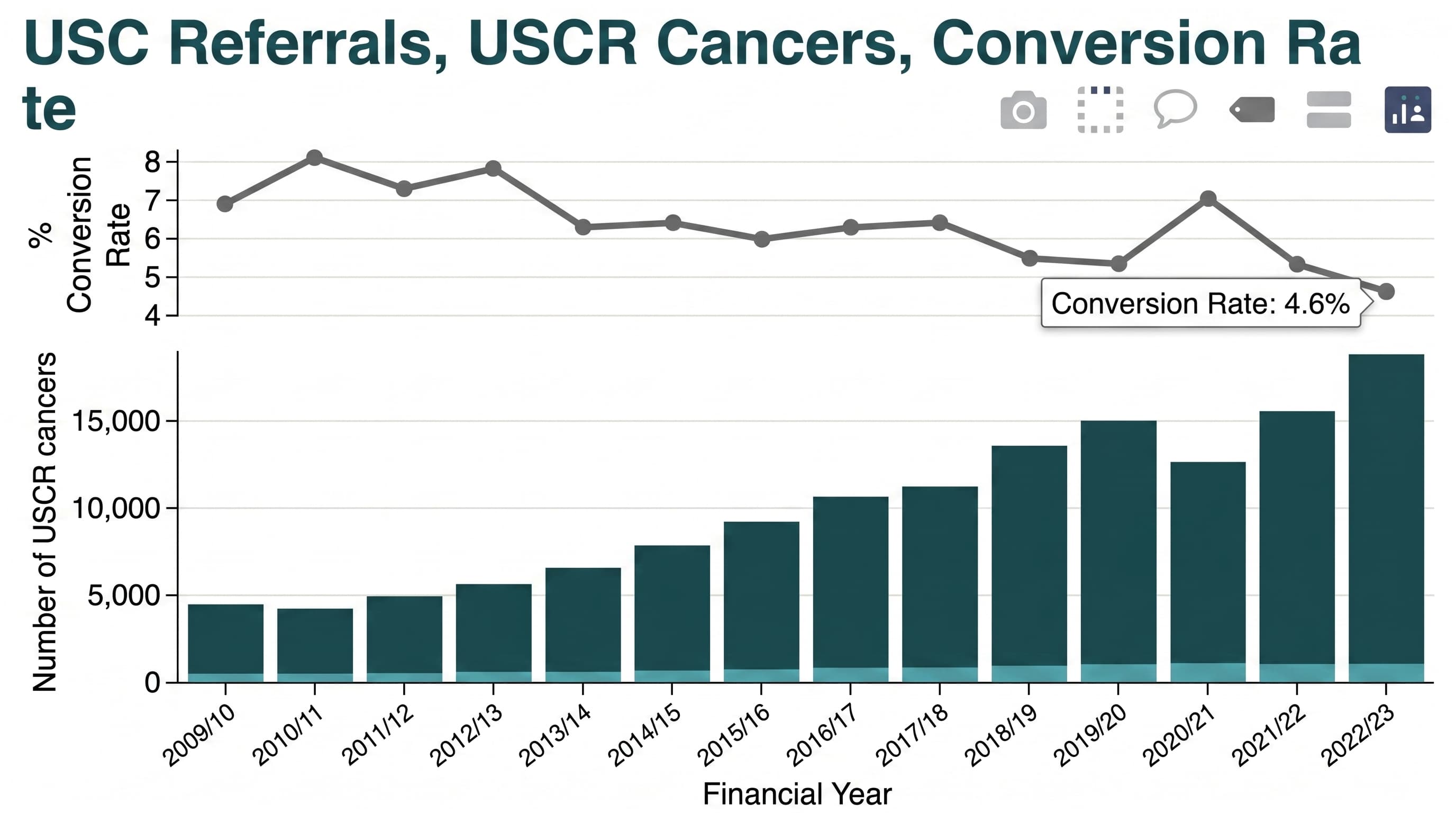
Data from Herts & West Essex ICB illustrates the scale of demand clearly. For the year 2022/23:
| Herts & West Essex ICB (2022/23) | Figure |
|---|---|
| Urgent suspected skin cancer referrals | 18,624 |
| Cancers detected | 852 |
| Overall conversion rate | 4.6% |
That means the vast majority of lesions referred urgently were ultimately non-cancerous. Again, this does not mean referrals were wrong. It demonstrates how difficult lesion assessment can be in frontline practice.
Source: NHS England Cancer Referral Conversion and Detection Dashboard / NDRS Cancer Waiting Times Data.
Why decision-making before referral matters
The safest option in uncertainty is often referral. From an individual clinician’s perspective, that makes complete sense. But when multiplied across the healthcare system, this creates substantial pressure. How to reduce inappropriate 2WW dermatology referrals is therefore not a question of reducing referrals overall, nor of raising thresholds unsafely. It is a question of improving clarity before referral decisions are made.
The role of structured lesion triage
In many settings, skin lesion assessment remains informal: a quick look, a gut feeling, a judgement call. Sometimes this happens without dermoscopy, without documentation, or without recognising the lesion at all. Structured lesion triage introduces consistency into that process, not to replace clinician judgement, but to support it.
A structured workflow can help standardise image capture, improve documentation, support earlier recognition of concerning features, and guide appropriate onward management. That may include reassurance, monitoring, routine review, or urgent referral where appropriate.
Maintaining safety while improving efficiency
The NHS timed diagnostic pathway for skin cancer exists for an important reason. Melanoma remains one of the most serious skin cancers, and early diagnosis saves lives. But improving pathway efficiency is also important, because every avoidable urgent referral consumes specialist capacity that could otherwise be directed towards higher-risk patients.
The future of dermatology pathways is unlikely to involve fewer referrals. It is more likely to involve better triage, better imaging, better documentation, and more structured decision-making before referral occurs.
Final thoughts
Skin cancer referrals are rising rapidly across England. Dermatology services continue to face growing demand. Clinicians remain under pressure to make difficult decisions in situations where uncertainty is common. Structured lesion assessment cannot eliminate uncertainty entirely, but it can reduce variation — and reducing variation is one of the most important ways to improve both patient safety and pathway efficiency.
Reducing variation is one of the most important ways to improve both patient safety and pathway efficiency.
Author
Dr Nick Nosina
NHS GP | GP with Specialist Interest in Dermatology (GPwSI) | Aesthetic Doctor
Founder, MoleScan®
References
- National Institute for Health and Care Excellence. (2022). Suspected cancer: Recognition and referral (NG12). NICE. nice.org.uk/guidance/ng12
- NHS England. (2022). Suspected skin cancer two week wait pathway optimisation guidance. NHS England. england.nhs.uk/publication/suspected-skin-cancer-two-week-wait-pathway-optimisation-guidance
- NHS England. (2023). Skin cancer timed diagnostic pathway. NHS England. england.nhs.uk/publication/skin-cancer-timed-diagnostic-pathway
- NHS England. (2023). Faster diagnosis standard. NHS England. england.nhs.uk/cancer/faster-diagnosis
- NHS England. (2023). Cancer referral conversion and detection dashboard. NHS England.
- NHS England. (2023). National Disease Registration Service (NDRS) Cancer Waiting Times Data. NHS England.
- NHS UK. (2024). Melanoma skin cancer. NHS. nhs.uk/conditions/melanoma-skin-cancer
- World Health Organization. (2023). Skin cancers. World Health Organization. who.int/news-room/fact-sheets/detail/skin-cancers
Frequently asked questions
What is the 2-week-wait dermatology pathway?
The 2-week-wait (2WW) pathway is an NHS process that requires patients with suspected cancer to be seen by a specialist within two weeks of referral. In dermatology, the 2 week wait skin cancer referral pathway is used to triage suspected melanoma and other skin cancers urgently.
Who can refer to the 2WW dermatology pathway?
Any NHS-registered clinician can make a 2WW skin cancer referral — most commonly GPs in primary care, but also other practitioners working within NHS pathways.
What is the current 2WW skin cancer conversion rate in the UK?
NHS England data shows the conversion rate fell from approximately 8.3% in 2009/10 to 6.2% in 2022/23. Conversion rates vary widely between regions, from 2.4% to 11.9% in 2022/23.
Why are 2WW dermatology referrals rising?
Skin cancer referrals are rising due to a combination of public awareness, increased detection effort, and clinician caution in primary care. NHS England data shows the urgent suspected skin cancer referral rate rose from 371 per 100,000 in 2009/10 to 1,345 per 100,000 in 2022/23.
How can inappropriate 2WW dermatology referrals be reduced?
Reducing inappropriate referrals is best achieved by improving clinical clarity before referral — through structured lesion assessment, dermoscopy, documentation, and timely review by a GP with specialist interest in dermatology.